Anjali Rimi has spent eight years building Parivar Bay Area. It's one of the country's only Kinnar and Hijra-serving organizations — terms used across South Asia for trans and third-gender communities. Most of its clients are immigrants and asylees from the South Asian diaspora.
Now, she says, it could all disappear today.
"Our public funding has not been awarded back to us, despite quantifiable and qualitative results and deliverables met for two fiscal years now," Rimi said. "And therefore our programming, which highly relied on public funding, has been stalled since April 2026."
Parivar lost its city and state funding this year. Its local programming has been paused since April.
Without new funding, Rimi says Parivar would likely lose its physical space and scale back even further.
"It's heartbreaking after spending eight years and more building this organization," she said. "Our future will become smaller, and eventually we will become history."
Rimi said the organization has helped more than 104,000 people worldwide since it was founded — roughly 50,000 of them across the nine Bay Area counties.
What Parivar does
Parivar is widely described as one of a kind — the only organization of its size built specifically around trans leadership and trans community for the South Asian immigrants.
The nnonproft prioritizing and uplifting Hijra, Kinnar, Thirunangai, Mangalmukhi and Khwaja Sira identities — the range of trans and gender-diverse communities across the South Asian diaspora — alongside all global South immigrants and families. Locally, its work looks like a handful of core programs:
- Trans-specific immigration and resettlement support: helping newly arrived transgender immigrants and asylees navigate housing, benefits, and legal systems.
- A legal clinic called Tilari: run with Okan Law, offering free or low-cost help with immigration cases.
- An emerging immigrant leadership program: which has graduated more than 200 people and offers stipends of up to $1,500 toward job training or starting a small business.
- Community and cultural events: Diwali celebrations, fundraisers like Bhangra & Beats Night Market — built around what Rimi calls "trans joy," and protecting South Asian trans and gender-diverse cultural heritage.
- Direct crisis response: for transgender immigrants facing urgent danger or need, even now, connecting people to partner organizations while Parivar's own programs are paused.

What Funding Can't Replace
Rimi has said the organization's staff bring lived experience that helps build trust with the community it serves — something she says can't easily be replicated elsewhere.
Since April, nearly all of these programs have been on pause.
Rimi founded Parivar in 2018. In its early years, funding came from a mix of sources — corporate donors, individual donors, a little bit of public money. But as the organization's programs became more rooted in San Francisco and grew across the Bay Area and the state, that mix shifted.
"97% of our funding since 2022 has been coming from government public funding, primarily through the city and county of San Francisco," Rimi said.
That reliance has become the organization's biggest vulnerability. The city didn't award new funding this year, Rimi said, and a state grant that had been keeping Parivar afloat — delayed nearly a year in its execution — has now run dry.
"That grant kind of allowed us to stay afloat and continue our programming, which only increased the number of community needs, or slots, through the last two fiscal years," Rimi said. "And now that grant has also fully been exhausted."
Part of it, Rimi said, comes down to timing.
"Our own people, including myself, were going through immigration challenges during what is called the budget advocacy timeframe," Rimi said. "And that's one factor — so we didn't have a seat at the table."
She points to something bigger, too — the position trans immigrant organizations occupy right now, nationally and locally.
"We are transgender people who have lived traumatic, lived lives, who have stepped up to be on the front lines of an organization called Parivar Bay Area," Rimi said. "And we all know what is happening to transgender people right now nationally, in terms of erasing our identity... when we are trans immigrants, we are on the margins of the margins, even within the LGBTQ community."
City officials say they are committed to supported immigrant and transgender communities. A Human Rights Commission spokesperson told KQED that Parivar was represented in the budget advocacy process and the city will continue to work with Parivar.
The funding gap has put Parivar's headquarters at risk, too. The organization opened its Turk Street office less than a year ago, during a Diwali celebration packed with city officials. Now the lease, which was subsidized for the last year, is increasing.
"Our rent, if we wanna continue to stay here, is now going back to market rate to be four times more than what we are paying," Rimi said.
Parivar is asking the mayor's office for immediate help — including the release of money already owed for completed work. Even paused, Rimi said, the community need has continued.
"It has not stopped just because Parivar Bay Area has no funding," Rimi said. "We still continue to help folks in critical emergency situations, whether it's immigration relief or particular transgender struggles.”
After a meeting with the mayor's office today, Rimi said the mayor's office has confirmed it will pay the funds owed and remains committed to long-term support, but only if the organization can get through the next few months of a budget deficit, with hopes pinned partly on pending philanthropic and non-government grants. In the meantime, Rimi uncertain whether they'll be able to sustain their current space.




A rise in hate, alongside support
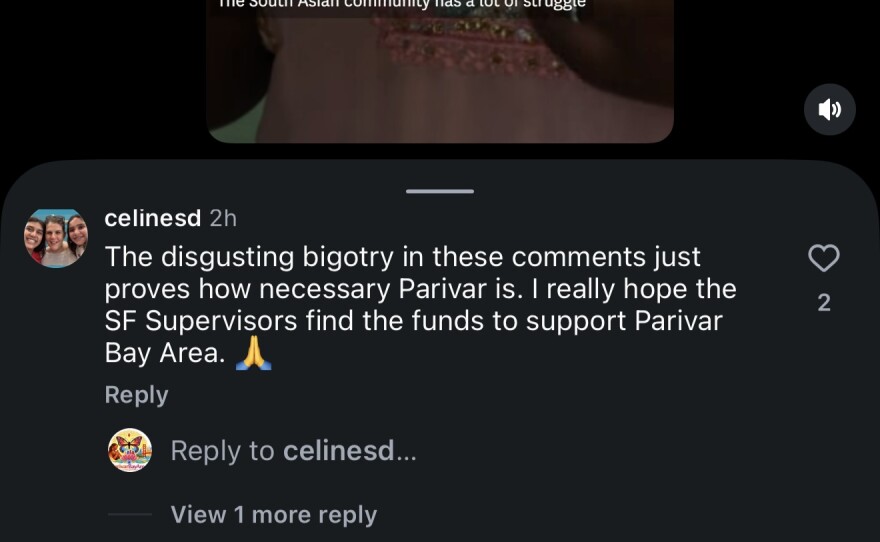
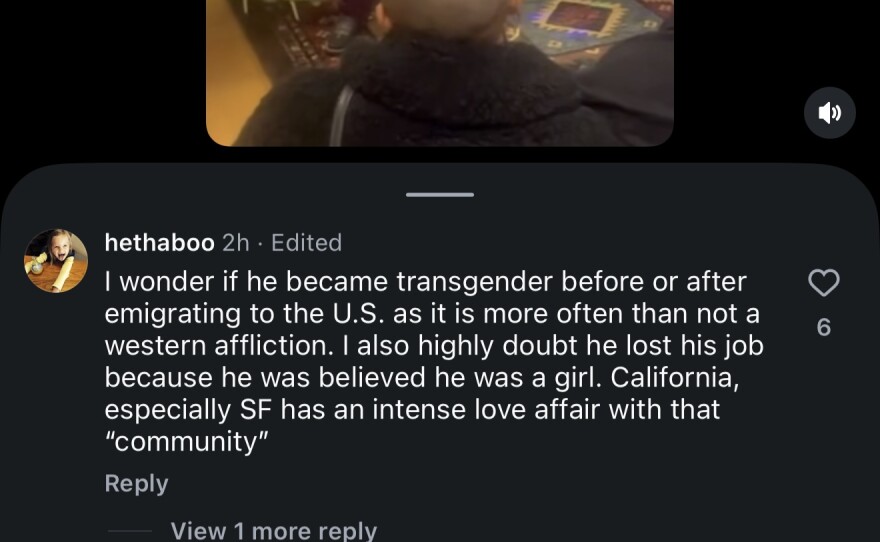
As Parivar has pushed for emergency funding and drawn more media attention, that visibility has come at a cost. Rimi says she's seen a surge in anti-trans hate directed at her social media pages.
“This kind of hate reminds us of why our work is so necessary,” she said. “And the hate is attributed to the narratives that are spread around about trans folks, about immigrant folks, that we are a burden to the society, we are consuming tax dollars without any return.”
The hostility isn't new to her, she said — but its timing has made it harder to carry.
"I am not defeated," Rimi said. "Every person who walks through our doors looking for hope tells me that I need to keep going and do everything I can to keep us remaining, and not just be remembered."
Rimi had one more thing she wanted people to hear.
"If not Parivar Bay Area, if not Anjali Rimi, you can support or show up, or if nothing else, be a silent ally to trans folks and immigrant folks," Rimi said. "We are all in this together — If it's us today, it could be you tomorrow."