This story aired in the 11/16/26 episode of Crosscurrents
The San Francisco Frontrunners have lived through the AIDS crisis, the fight for marriage equality, and countless miles together. One longtime member has made it his mission to preserve the group’s history.
Click the play button above to listen!
STORY TRANSCRIPT:
Members of the San Francisco FrontRunners have faced some major moments. They’ve lived through the AIDS crisis, the fight for marriage equality, and countless miles together.
Over the decades, thousands of runners have passed through this LGBTQ+ running club, founded in 1973. And one longtime member has made it his mission to preserve the history of the group.
KALW’S Travis Raburn has the story.
TRANSCRIPT
FRONTRUNNER CAPTAIN: Well, good morning everyone. It's good to see you all on this gorgeous weekend.
REPORTER: It's just after 9 on a Saturday morning in Golden Gate Park.
FRONTRUNNER CAPTAIN: We're going to start off with some introductions.
REPORTER: Nearly 50 runners are gathered near Blue Heron Lake. I'm standing next to 86-year-old Bob Callori.
CALLORI: I've been here 26 years doing this. Every Saturday, Tuesday, and Thursday.
FRONTRUNNER: That's commitment.
REPORTER: He makes a point of welcoming first-time runners.
CALLORI: What neighborhood do you live in?
FRONTRUNNER: I'm in Hayes Valley.
CALLORI: Close! Hey, it's so close you could've come years ago. Well glad to have you.
REPORTER: Bob has a special ritual for newbies like Kat Koehlmoos and David Deriso.
Before every run, he gives them a pink ribbon that says "first-time runner" and then hands them a business card.
KAT KOEHLMOOS: He came up to me, made me feel welcome. He gave me the classic pink ribbon.
DAVID DERISO: He sort of set the tone of welcoming us that I think the organization carries forward.
REPORTER: Nicholas Gonsalves, has been a member for the past eight years.
GONSALVES: I always feel like Bob is just like this kind of legendary figure for the club.
CALLORI: When I'm running in a race I can still do three miles in under an hour.
GONSALVES: He's 86, still runs every Saturday, and he can run like 12-13 minute pace.
CALLORI: I'm gonna do this strange little detour. Oh, yeah, off-roading.
GONSALVES: You see him, he does this two-mile course - two, two and a half miles, actually.
And he does it consistently every single Saturday. And it's just pretty impressive.
REPORTER: The running is one reason why Bob stands out. But Nick says there's something else.
GONSALVES: You always think about, like, people that just have like a certain, I don't know, just place in the community. And he always has that.
REPORTER: Bob is one of those people who has a helping hand in nearly everything the club does. He's organized events, acted as their photographer, and archived the group's history.
In 1973, there was an "alternative university" in San Francisco for LGBTQ+ people.
ALFRED: This is the gay life KSAM's public affairs show for gentlemen who prefer gentlemen, women who prefer women, and people who prefer people...
REPORTER: Here's radio host Randy Alfred talking about it on a show called "the Gay Life".
ALFRED: It was spawning all kinds of various interest groups where gay people were discovering that there were other gay people who were into bicycling, yoga, postcard collecting or whatever, and forming interest groups.

REPORTER: And two gay men started a jogging class called the Lavender U Joggers.
ALFRED: There's this kind of an old image we grew up with, of being sissies and not that interested in sports.
REPORTER: The Frontrunners challenged society's views of gay people just by being visible. By being a gay run club.
In this episode of The Gay Life, Alfred is interviewing Jim Milton, a former president of the Frontrunners.
MILTON: We thought, in addition, that it's really important to take being gay into the world of athletics.
ALFRED: I'd like to see some of those macho punks who try to prove their masculinity by beating up on, in packs of six or seven, beating up on a single gay man walking home. I'd like to see any one of them try to run a marathon.
REPORTER: By 1978, though, Lavender U was out of business. And the runners were forced to reorganize. They changed the name to the Frontrunners. Today, Frontrunners has over 130 chapters in more than 30 countries.
For Bob, the group has been about more than just running.
CALLORI: It was nice that Frontrunners gave me a new family. And so I had some place to go and something to do, and stayed away from the bars. And stopped drinking all that time. That was a nice way to get into a healthy life.

REPORTER: Bob even started dating his now-husband, Chris Goodwin, because of the Frontrunners' weekly runs.
CALLORI: I kind of initially felt when we met that this was going to work. So I started documenting our life story from day one. At the end of our first year, I presented him with this large album of pictures and events that we had.
REPORTER: Long before we had cameras in our phones, Bob carried a small one on every run.
CALLORI: I put it in my little fanny pack, and I'd grab that and take it out no matter where I was to document stuff.
REPORTER: Documenting his relationship soon turned into documenting the running club. In the home he shares with Chris, Bob archives the group's activities and memorabilia.
In an upstairs room of his home, there's a smattering of papers on a desk by the window. On shelves, there are trophies going back decades, and in the closet are boxes upon boxes of medals, shirts, and files.
CALLORI: It sort of all started because materials were being stored in members' basements. So one of the presidents and I decided to go to a storage unit, rent it out and put all the archiving material there. That's been, 20, more than 20 years ago.
REPORTER: Bob opened the boxes and made an inventory. Then people began bringing him more.
CALLORI: I created a spreadsheet of every item that was in the storage unit. And eventually that became the archiving process for me to start going fully into action. I was the foot locker, or the storage unit for clothing and stuff. And I said, well, I guess I have to start documenting.
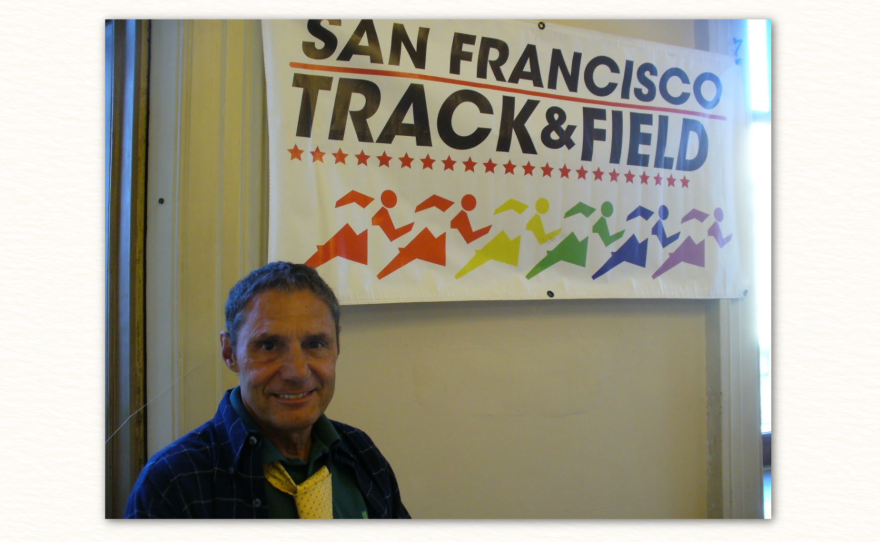
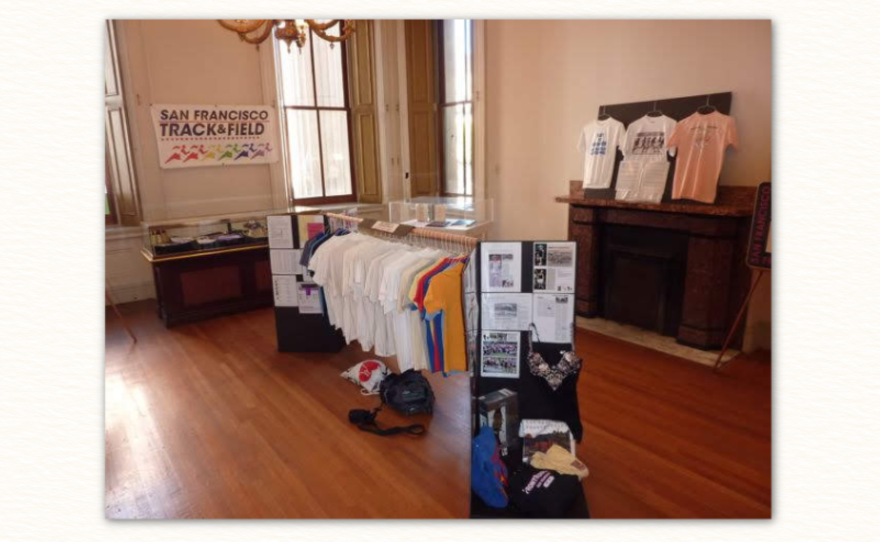

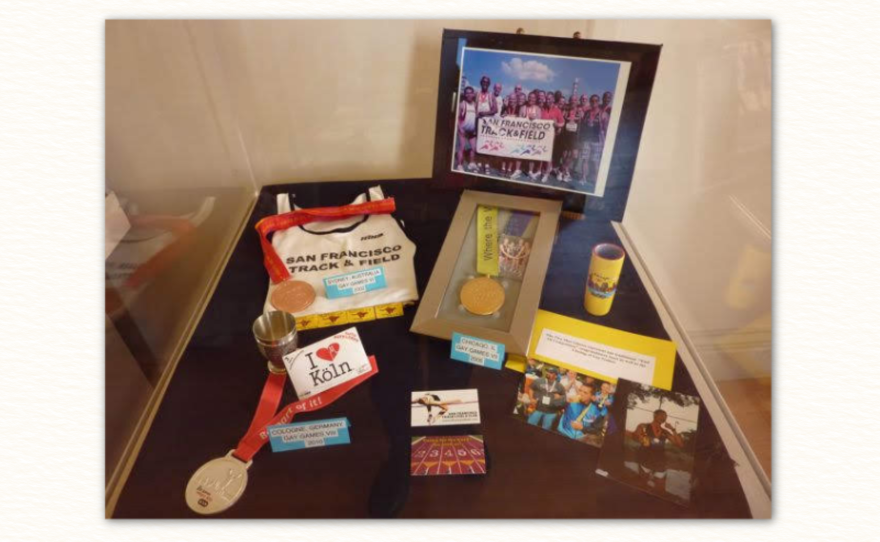
REPORTER: Bob has amassed such a large archive that he decided to donate a lot of it to the GLBT Historical Society.
CALLORI: It's nice to know that we're keeping the history. We know what happened day one, and we will continue knowing that it's saved.
REPORTER: The club has changed over the years: parties moved from members' homes to bars, and even their logo is getting a makeover. Bob's not keen on all of them.
CALLORI: I'm just an old guy that likes to make sure that things stay the same, but I have to let things go. Times change.
REPORTER: But there's one tradition that just keeps getting stronger: the club's annual Pride Run.
PRIDE RUN ANNOUNCER: Two! One! We're gonna do windmills or toe touches!
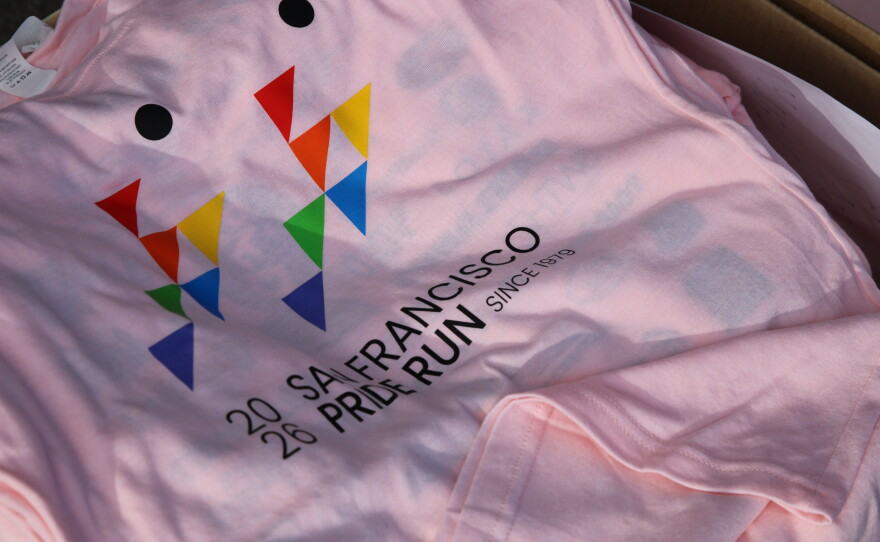
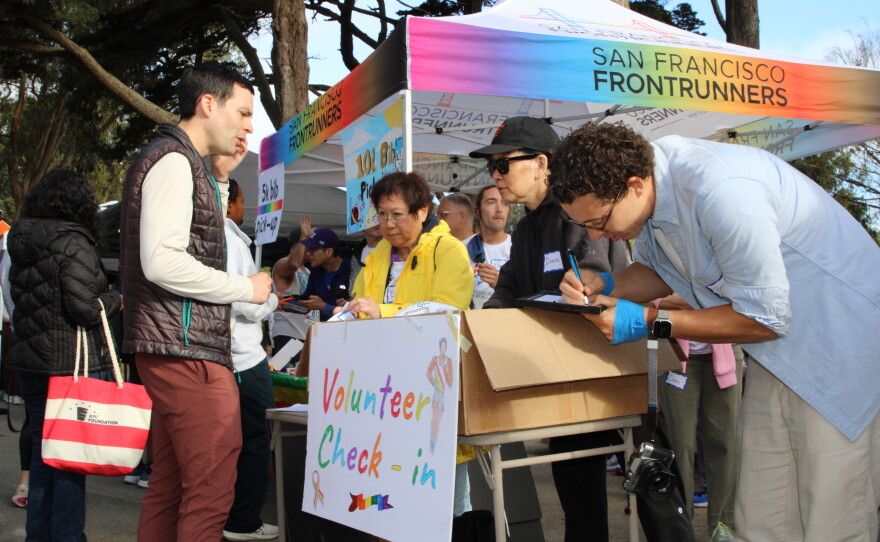
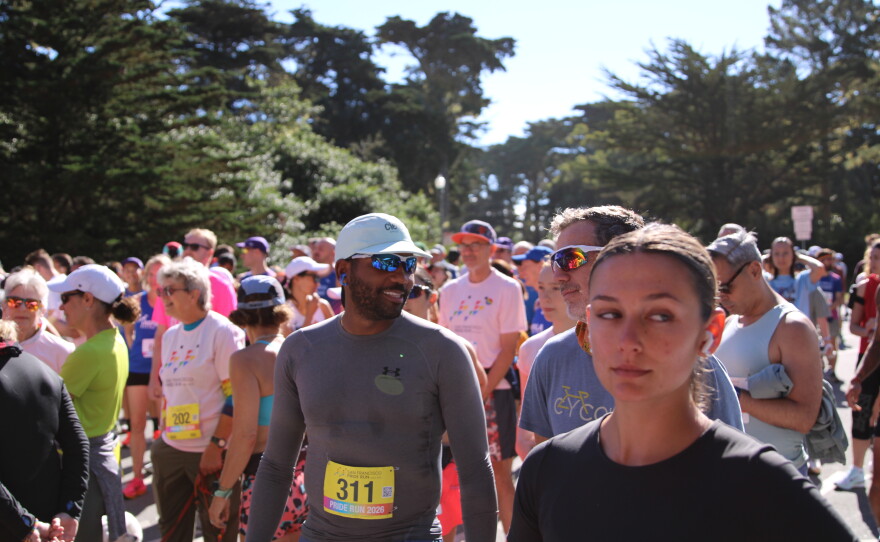
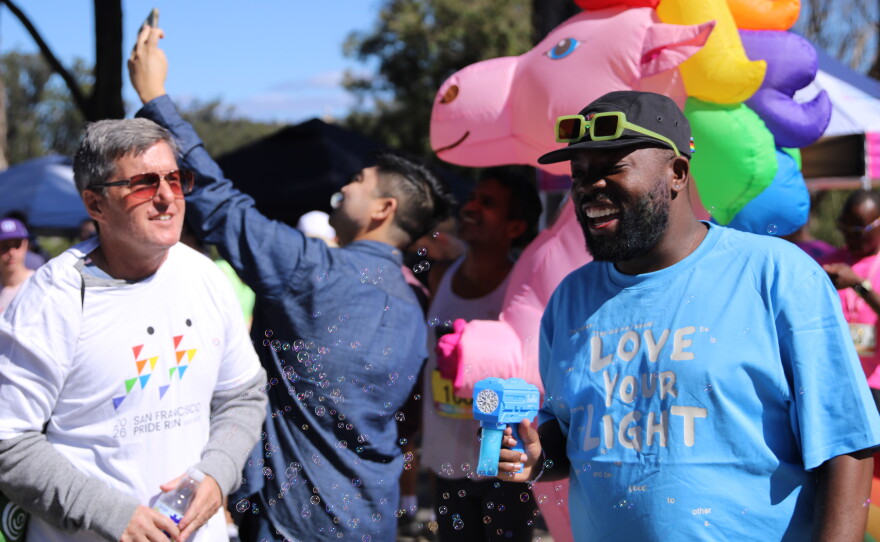
REPORTER: Held on the weekend before the City's Pride Parade. This year's San Francisco Pride Run was the biggest in the event's history with over 950 participants.
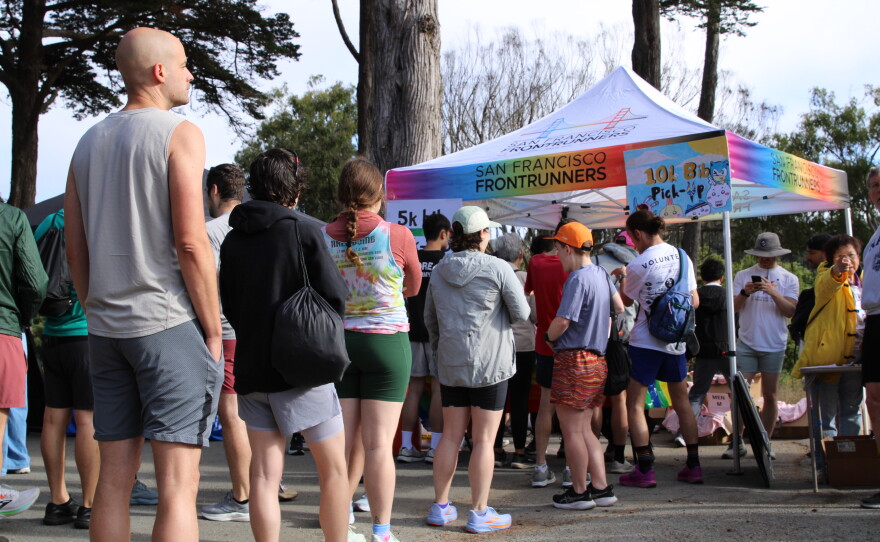
PRIDE RUN ANNOUNCER: And one! We're gonna come down towards the ground. Five! Four! Three! Two! One! And have a great race.
REPORTER: And the club is still about so much more than running for its members. Nick Gonsalves:
GONSALVES: My first few years in San Francisco, I actually had straight tech friends or something like that.
REPORTER: He says he didn't have many queer friends.
GONSALVES: Once I got into the run club, it was kind of like my first opportunity to have that kind of thing.
REPORTER: A queer community outside of dating.
GONSALVES: It was just different. You know, it actually took, oddly enough, some time getting used to, because my brain was so like mostly that gay part was just, like, romantic. It really opened up doors for me in a way that I just feel like I'm still processing.
REPORTER: What started as two gay men starting a jogging club in 1973, has grown into an international organization. And for members of different generations – like Nick Gonsalves and Bob Callori – the Frontrunners is a home.