

- 330th Day of 2013 / 35 Remaining
- 25 Days Until The First Day of Winter
- Sunrise:7:02
- Sunset:4:52
- 9 Hours 50 Minutes of Daylight
- Moon Rise:12:17am
- Moon Set:12:55pm
- Moon’s Phase: 40 %
- The Next Full Moon
- December 17 @ 1:29amam
- Full Cold Moon
- Full Long Nights Moon
During this month the winter cold fastens its grip, and nights are at their longest and darkest. It is also sometimes called the Moon before Yule. The term Long Night Moon is a doubly appropriate name because the midwinter night is indeed long, and because the Moon is above the horizon for a long time. The midwinter full Moon has a high trajectory across the sky because it is opposite a low Sun.
- Tides
- High:5:23am/5:05pm
- Low:11:52am/11:12pm
- Rainfall (measured July 1 – June 30)
- Normal To Date:4.04
- This Year:1.70
- Last Year:4.08
- Annual Seasonal Average:23.80
- Holidays
- National Cake Day
- International Aura Awareness Day
- Republic Day-Mongolia
- On This Day In …
- 1789 --- President George Washington signed a proclamation on October 3, 1789 declaring Thursday the 26th day of November as the first national Thanksgiving Day under the Constitution.
- 1825 --- The first college social fraternity, Kappa Alpha, was formed at Union College in Schenectady, N.Y.
- 1832 --- In New York City, the first public streetcar line in the U.S. began carrying passengers today. The fare was 12½¢.

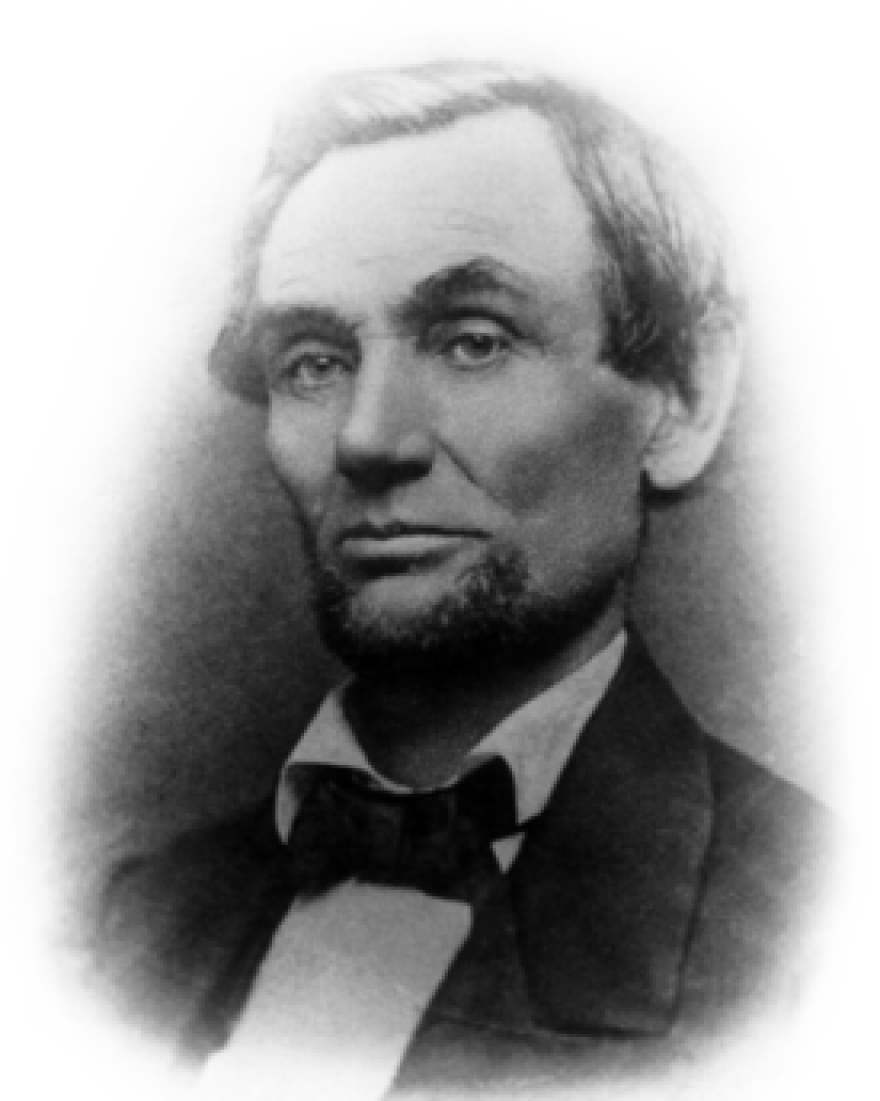
- 1860 --- A newspaper print of newly elected President Abraham Lincoln clearly showed the beginnings of abeard. The idea for the beard had come from a letter sent by 11-year-old Grace Bedell, who had suggested that Mr. Lincoln would look better with a beard.


- 1862 --- Oxford mathematician Charles Lutwidge Dodgson sends a handwritten manuscript called Alice's Adventures Under Ground to 10-year-old Alice Liddell. The 30-year-old Dodgson, better known by his nom de plume Lewis Carroll, made up the story one day on a picnic with young Alice and her two sisters, the children of one of Dodgson's colleagues. Dodgson, the son of a country parson, had been brilliant at both mathematics and wordplay since childhood,when he enjoyed making up games. However, he suffered from a severe stammer, except when he spoke with children. He had many young friends who enjoyed his fantastic stories: The Liddell children thought his tale of a girl who falls down a rabbit hole was one of his best efforts, and Alice insisted he write it down. During a visit to the Liddells, English novelist Henry Kingsley happened to notice the manuscript. After reading it, he suggested to Mrs. Liddell that it be published. Dodgson published the book at his own expense, under the name Lewis Carroll, in 1865. The story is one of the earliest children's books written simply to amuse children, not to teach them. The book's sequel, Through the Looking Glass, was published in 1871.


- 1872 --- The Great Diamond Hoax, one of the most notorious mining swindles of the time, is exposed with an article in the San Francisco Evening Bulletin. Fraudulent gold and silver mines were common in the years following the California Gold Rush of 1849. Swindlers fooled many eager greenhorns by "salting" worthless mines with particles of gold dust to make them appear mineral-rich. However, few con men were as daring as Kentucky cousins Philip Arnold and John Slack, who convinced San Francisco capitalists to invest in a worthless mine in the northwestern corner of Colorado. Arnold and Slack played their con perfectly. They arrived in San Francisco in 1872 and tried to deposit a bag of uncut diamonds at a bank. When questioned, the two men quickly disappeared, acting as if they were reluctant to talk about their discovery. Intrigued, a bank director named William Ralston tracked down the men. Assuming he was dealing with unsophisticated country bumpkins, he set out to take control of the diamond mine. The two cousins agreed to take a blindfolded mining expert to the site; the expert returned to report that the mine was indeed rich with diamonds and rubies. Joining forces with a number of other prominent San Francisco financiers, Ralston formed the New York Mining and Commercial Company, capitalized at $10 million, and began selling stock to eager investors. As a show of good faith, Arnold and Slack received about $600,000-small change in comparison to the supposed value of the diamond mine. Convinced that the American West must have many other major deposits of diamonds, at least 25 other diamond exploration companies formed in the subsequent months. Clarence King, the then-little-known young leader of a geographical survey of the 40th parallel, finally exposed the cousins' diamond mine as a hoax. A brilliant geologist and mining engineer, King was suspicious of the mine from the start. He correctly deduced the location of thesupposed mine, raced off to investigate, and soon realized that the swindlers had salted the mine--some of the gems he found even showed jewelers-cut marks. Back in San Francisco, King exposed the fraud in the newspapers and the Great Diamond Hoax collapsed. Ralston returned $80,000 to each of his investors, but he was never able to recover the $600,000 given to the two cousins. Arnold lived out the few remaining years of his life in luxury in Kentucky before dying of pneumonia in 1878. Slack apparently squandered his share of the money, for he was last reported working as a coffin maker in New Mexico. King's role in exposing the fraud brought him national recognition--he became the first director of the United States Geological Survey.

Clarence King's survey party

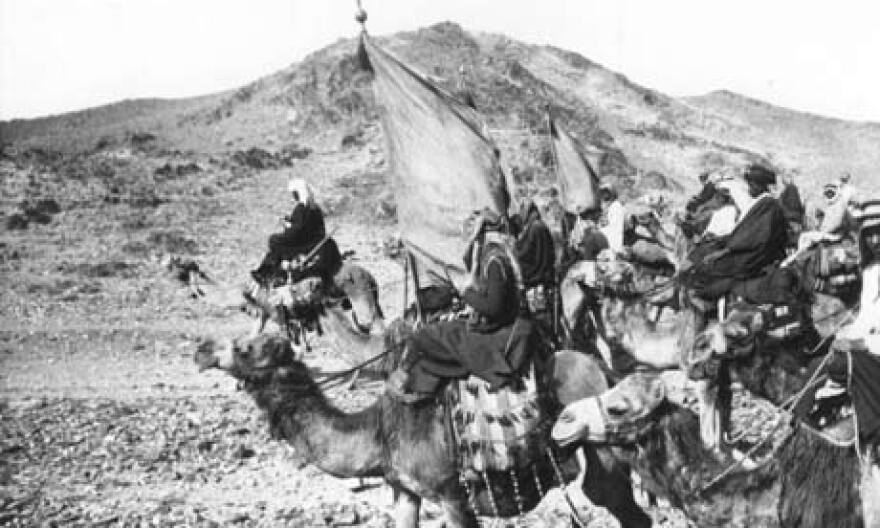
- 1916 --- Thomas Edward Lawrence, a junior member of the British government's Arab Bureau during World War I, publishes a detailed report analyzing the revolt led by the Arab leader Sherif Hussein against the Ottoman Empire in the late spring of 1916.
- 1922 --- The tomb of the Boy King, Tutankhamen, was discovered in Egypt by Lord Carnarvon of England and Howard Carter of the United States. The find was called, “The greatest archaeological discovery of all time.” People in America, looking for brevity in identifying great things before they forget, shortened the name to Tut.

- 1931 --- The first cloverleaf interchange to be built in the United States, at the junction of NJ Rt. 25 (now U.S. Rt. 1) and NJ Rt. 4 (now NJ Rt. 35) in Woodbridge, New Jersey, is featured on the cover of this week's issue of the Engineering News-Record. (By contrast, a piece on the under-construction Hoover Dam was relegated to the journal's back pages.) With their four circular ramps, cloverleafinterchanges were designed to let motorists merge from one road to another without braking. They worked well enough—and became so ubiquitous as a result—that writer Lewis Mumford once declared that "our national flower is the concrete cloverleaf."


- 1933 --- Thousands of peoples in San Jose, California, storm the jail where Thomas Thurmond and John Holmes are being held assuspects in the kidnapping and murder of Brooke Hart, the 22-year-old son of a local storeowner. The mob of angry citizens proceeded to lynch the accused men and then pose them for pictures.


- 1941 --- U.S. President Franklin D. Roosevelt signed a bill establishing the fourth Thursday in November as Thanksgiving Day. In 1939 Roosevelt had signed a bill that changed the celebration of Thanksgiving to the third Thursday of November.
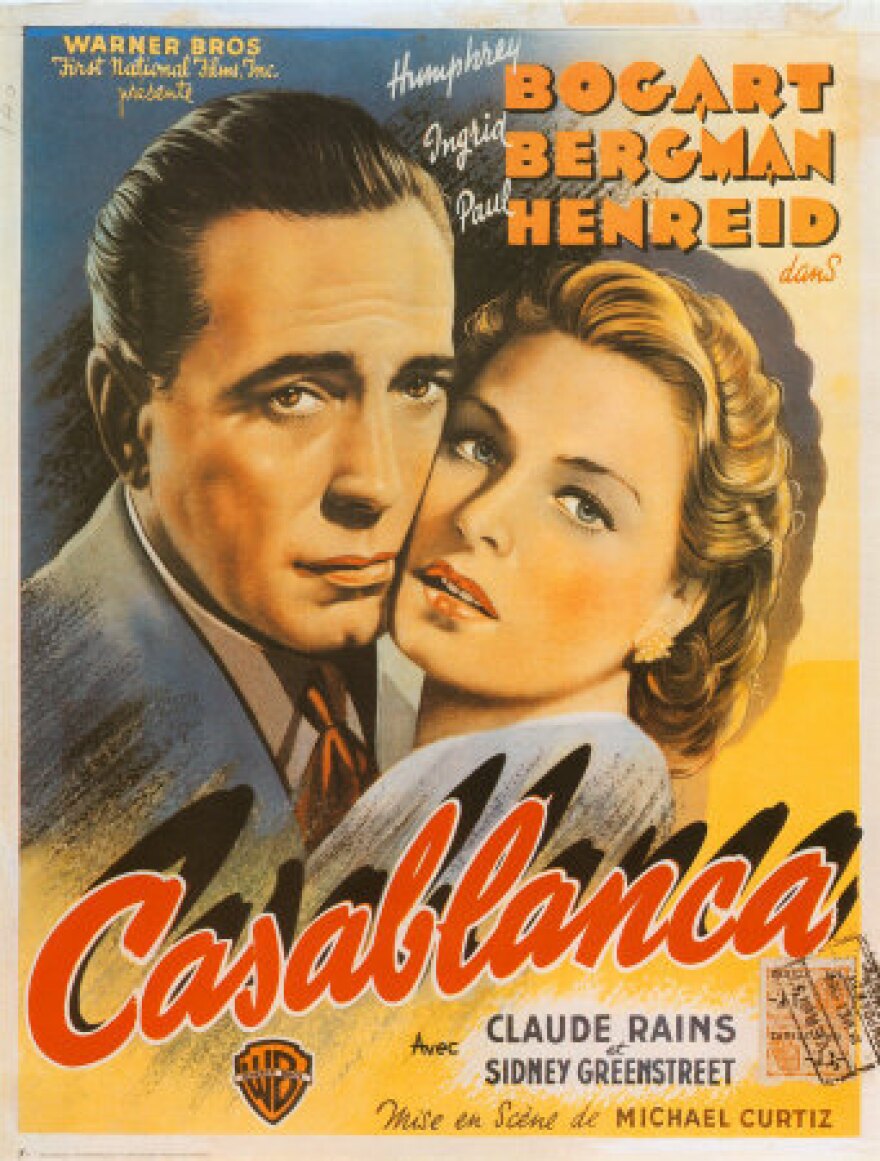
- 1942 --- Casablanca, a World War II-era drama starring Humphrey Bogart and Ingrid Bergman, premieres in New York City; it will go on to become one of the most beloved Hollywood movies in history.
- 1942 --- President Roosevelt ordered nationwide gasoline rationing, beginning December 1.

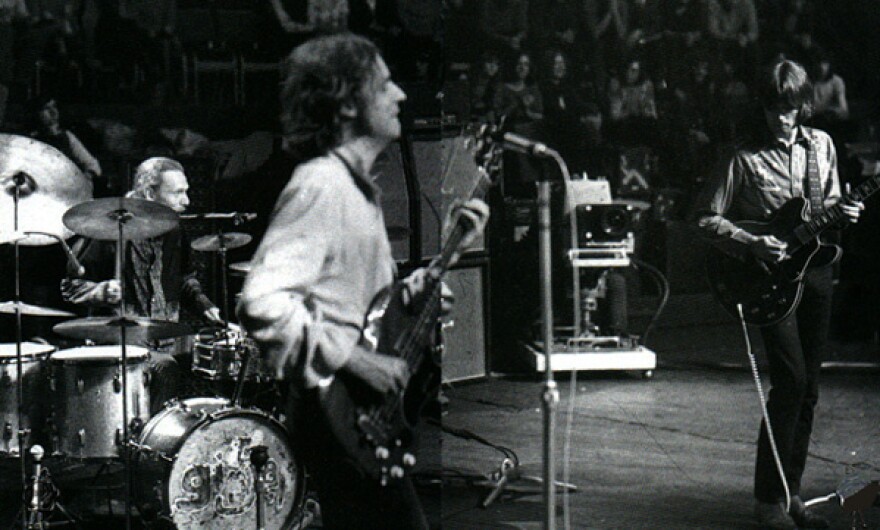
- 1968 --- Cream gave its last concert at the Royal Albert Hall in London. It was recorded and released as "Goodbye Cream" February 20, 1969.
- 1973 --- Rose Mary Woods, U.S. President Richard Nixon’s personal secretary, told a federal court she had accidentally erased

over eighteen minutes of a ‘Watergate tape’ made June 20, 1972. The recording was of a crucial conversation at an Oval-Office meeting between Nixon and Chief of Staff Bob Haldeman just three days after the Watergate break-in.


- 1975 --- Lynette ‘Squeaky’ Fromme, Manson-family devotee, was found guilty by a federal jury of trying to assassinate U.S. President Gerald Ford. Fromme, 27, had attempted to shoot the president in Sacramento CA Sep 5 with a hand gun. Secret service agents wrestled the weapon from her.
- 1983 --- A Brinks Mat Ltd. vault at London's Heathrow Airport was robbed by gunmen. The men made off with 6,800 gold bars worth nearly $40 million. Only a fraction of the gold has ever been recovered and only two men were convicted in the heist.
- 1992 --- Britain announced that Queen Elizabeth II had volunteered to start paying taxes on her personal income, and would take her children off the public payroll.
- 1998 --- British Prime Minister Toney Blair made a speech to the Irish Parliament. It was a first time event for a British Prime Minister.
- 2000 --- Florida Secretary of State Katherine Harris certified Republican George W. Bush the winner over Democrat Al Gore in the state's presidential balloting by 537 votes.
- Birthdays
- Charles M Schulz
- Tina Turner
- Rich Little
- John McVie
- Art Shell
- Sarah Grimke
- Eric Sevareid
- Robert Goulet